The rise of social media has led to a seismic shift in how the vast majority of people lead their lives, and its effects are often seen in the types of concerns brought up during individual therapy.
Whilst there are a lot of positive effects of social media such as enabling friends and family to stay in touch over long distances and meet new friends with similar interests, there are other more concerning effects that have been seen.
The most immediate concern, particularly when it comes to young people is the effect social media has on body image, but another effect that somewhat overlaps and may potentially have a wider effect is misinformation.
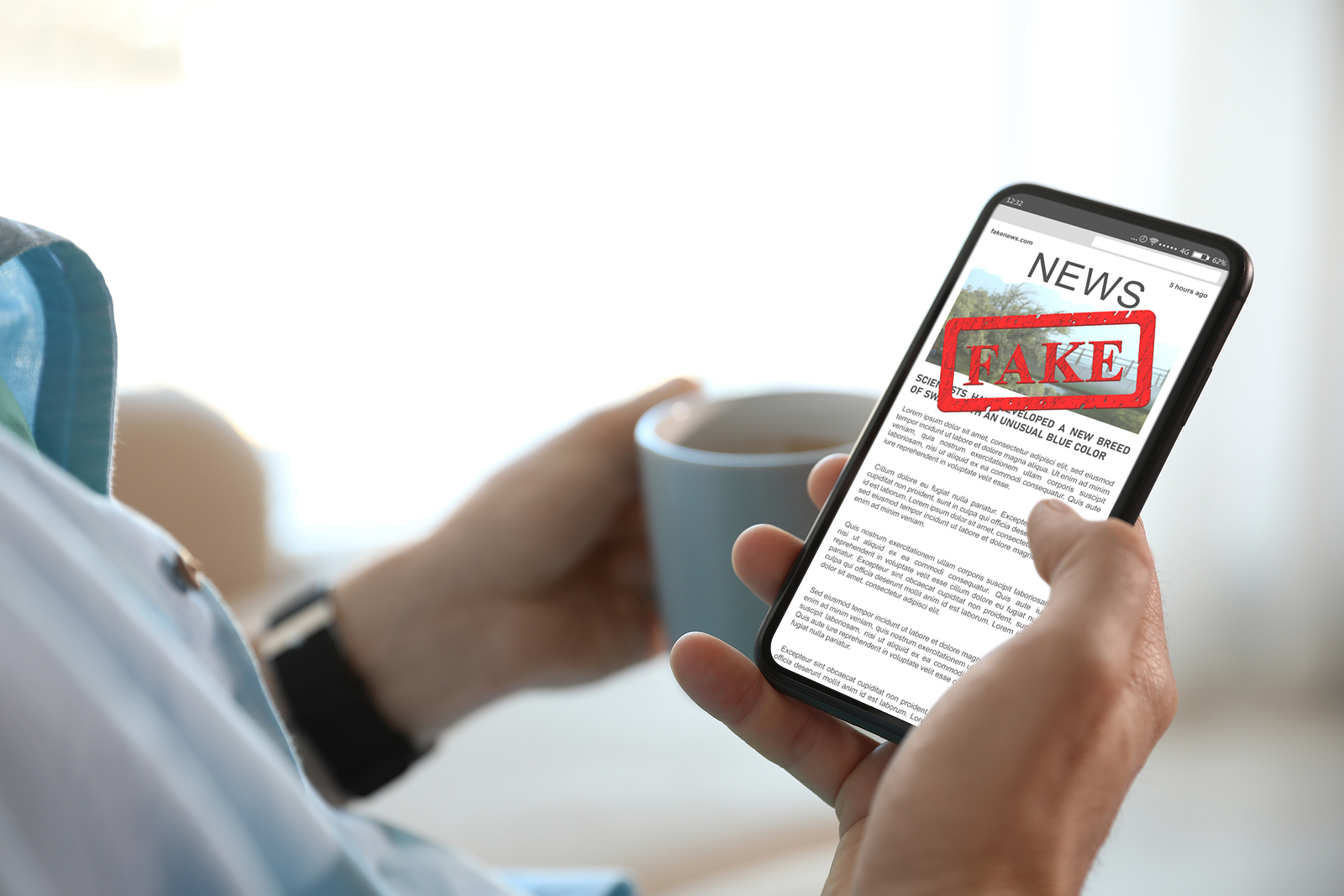
Misinformation or fake news, particularly that shared by trusted sources, can cause a considerable amount of mental and physical harm. But what if there was a way to stop it from taking hold?
A study by Cambridge University’s Department of Psychology has suggested a tactic known as pre-bunking, where people are taught how disinformation is spread, could be an effective means to stop it from taking as firm a hold.
Falsehood Flies
Lies can spread very quickly, and it is important to understand why people are susceptible to falsehoods, whether they take the form of outwardly convincing confidence tricks, gaslighting or believing disinformation.
A good example is the origin of the most famous quote about how lies can traverse the world whilst the truth is still getting their shoes on. It is commonly credited to author Mark Twain despite no evidence to support this.
The reason for this, as well as why other forms of misinformation are believed so readily is based on how people tend to automatically and unconsciously process information when going about their daily lives, known in psychological circles as “System 1 thinking”.
Because people process so much information through their day-to-day lives, System 1 thinking is an essential mental shortcut. If we tried to consciously think about every aspect of our day and surroundings (known as System 2 thinking), we’d never leave our doorstep.
Instead of interrogating every point, System 1 examination will look at five questions related to the information:
- Does it fit with our previous knowledge?
- Do other people believe it?
- Is there any evidence to support it?
- Is the source credible?
- Does the argument of the claim make sense?
If the information meets these five criteria to our satisfaction, we are likely to believe it and will dismiss anything that does not out of hand.
However, this unconscious process is vulnerable to trickery, and disinformation will often use all five of these tenants in an approach that is fast enough to latch into our minds. Once it’s there it can be very difficult to convince someone otherwise.
The Cambridge experiment showed this in action, as the power of “sticky” falsehoods would stop people from believing accurate information.
However, the solution they found was to expose people to the inner workings of how disinformation works through a game called Bad News, which put people in the role of someone spreading disinformation.